


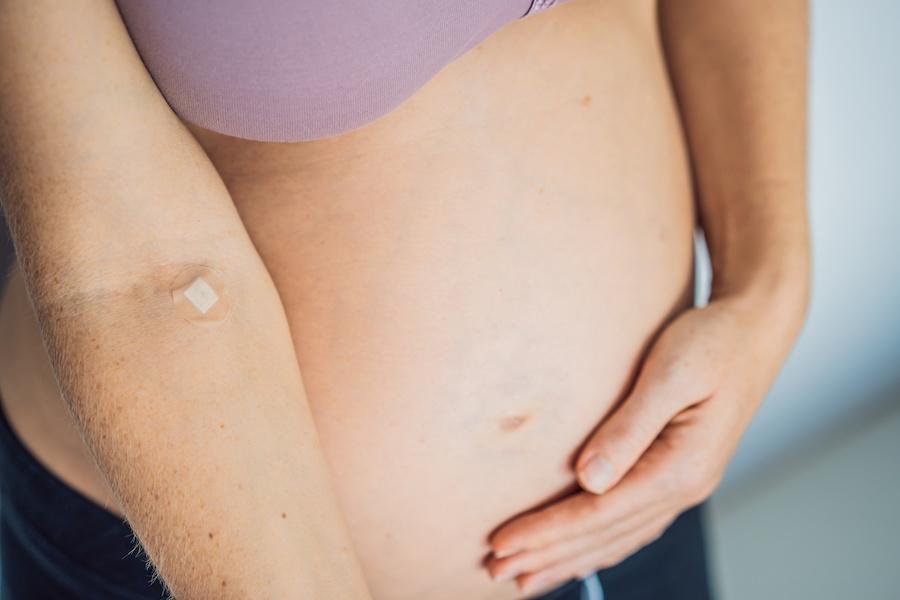


Prenatal screening tests are used during pregnancy to estimate the chance that a baby may have certain chromosomal conditions. These tests do not diagnose a condition—they assess likelihood. Noninvasive screening tests do not affect the pregnancy and do not increase the risk of miscarriage.
Here’s an overview of common early pregnancy screening options:
First-trimester combined screening
This screening includes two parts:
- A blood test (around 10 weeks of pregnancy) that measures pregnancy hormones and placental proteins
- An ultrasound (between 11–13 weeks) that measures nuchal translucency (fluid at the back of the baby’s neck)
These results are combined to estimate the likelihood of:
- Down syndrome (trisomy 21)
- Trisomy 18
- Trisomy 13
This test provides a risk estimate, not a diagnosis. If results show an increased chance, your healthcare provider may recommend additional screening (such as NIPT) or diagnostic testing.
NIPT (Noninvasive Prenatal Testing)
NIPT is a blood test that analyzes cell-free fetal DNA in the pregnant person’s bloodstream. It can be performed from 10 weeks of pregnancy onward.
NIPT screens for:
- Down syndrome (trisomy 21)
- Trisomy 18
- Trisomy 13
- Sex chromosome differences (optional)
An ultrasound is typically performed alongside or before the test to confirm gestational age and check for multiple pregnancies. Results are usually available within about 1–2 weeks.
NIPT is more accurate than first-trimester screening for detecting common chromosomal conditions.
- A low-risk result is highly reliable
- A high-risk result requires confirmation with diagnostic testing (such as CVS or amniocentesis)
Sources: