


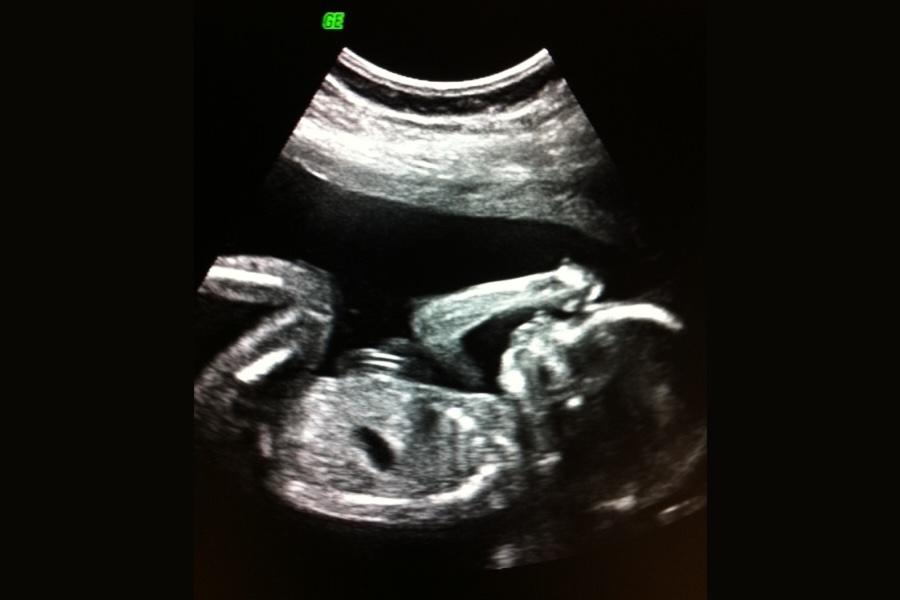


If prenatal screening tests such as first-trimester screening (combined screening) or NIPT (noninvasive prenatal testing) suggest an increased chance of a chromosomal condition, your healthcare provider will usually recommend diagnostic testing.
Diagnostic tests can confirm whether a condition is present. These tests involve sampling placental tissue or amniotic fluid and carry a small risk of miscarriage (generally less than 1%).
Types of follow-up tests:
Chorionic villus sampling (CVS)
CVS is typically performed between 10 and 13 weeks of pregnancy.
A healthcare provider uses a thin needle (through the abdomen) or a catheter (through the cervix) to collect a small sample of placental tissue. This sample is analyzed for chromosomal conditions such as:
- Down syndrome (trisomy 21)
- Trisomy 18
- Trisomy 13
Results are often available within a few days to 2 weeks.
CVS carries a small risk of miscarriage, generally estimated at less than 1%. Mild cramping may occur afterward, and your provider may recommend taking it easy for the rest of the day.
Amniocentesis
Amniocentesis is usually performed from 15 weeks of pregnancy or later. A thin needle is inserted through the abdomen to collect a small amount of amniotic fluid. The body naturally replaces this fluid within a few days.
The sample is analyzed for chromosomal conditions and certain genetic disorders. Results typically take 1–2 weeks.
As with CVS, there is a small risk of miscarriage (generally less than 1%). Mild cramping after the procedure is common.
Growth ultrasounds
Additional ultrasounds may be recommended to monitor your baby’s growth and development. These scans estimate fetal size and compare it to expected growth for gestational age. They may be recommended if:
- you previously had a baby with growth restriction
- you have a medical condition that could affect fetal growth measurements during pregnancy differ from expected
If performed once, this is called an estimated fetal weight assessment. When repeated, it allows providers to track growth over time. Blood flow (Doppler studies) and amniotic fluid levels may also be evaluated.
Sources: