


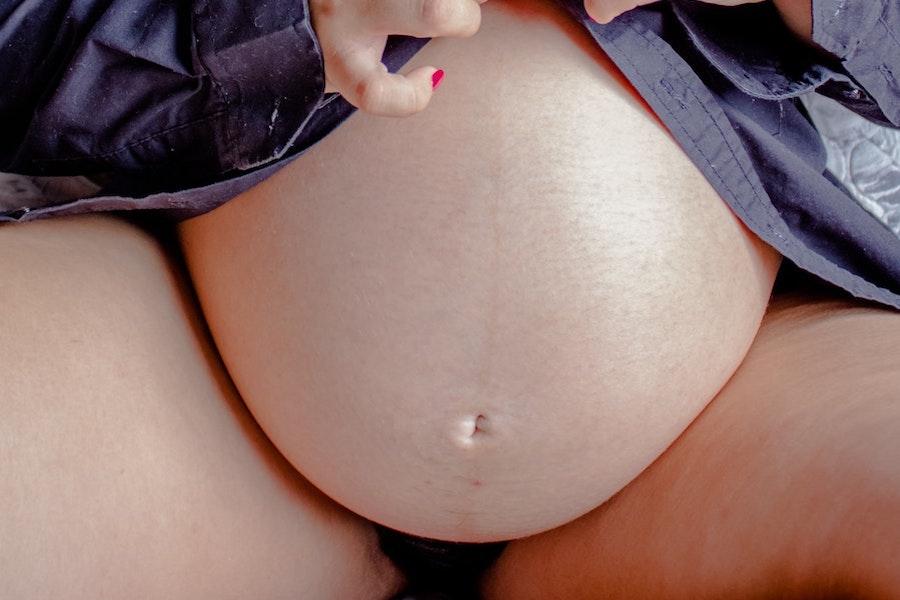


During pregnancy, the abdominal muscles stretch to accommodate the growing uterus. As this happens, the two rectus abdominis muscles naturally move apart along the midline. This is called diastasis recti.
The muscles are connected by a band of connective tissue called the linea alba, which becomes thinner and more flexible during pregnancy to allow for expansion.
A small gap between the muscles is normal, and it typically widens during pregnancy.
Nothing has “torn”
Diastasis recti does not mean the muscles have torn or split. Instead, the connective tissue stretches to allow space for the baby.
By late pregnancy, some degree of separation is normal and expected.
A “doming” or ridge
You may notice a ridge or “doming” along the midline of your abdomen when engaging your core, such as when sitting up or coughing.
This happens because the stretched connective tissue is less able to manage internal pressure.
Can I exercise during pregnancy?
Yes, staying active during pregnancy is encouraged. Core exercises can be continued, but may feel more difficult as your pregnancy progresses.
If an exercise causes discomfort or significant doming, it may be too challenging at that time. Adjusting intensity is usually sufficient.
Regular physical activity during pregnancy is associated with overall health benefits, but it does not appear to prevent diastasis recti.
Diastasis recti after birth
Diastasis recti often persists in the months after delivery. For many people, the gap gradually improves over time, although this can take up to a year or longer.
The focus is usually on function rather than gap size, and many individuals do not experience significant limitations.
Symptoms
Possible symptoms include:
- Reduced core strength
- A feeling of abdominal weakness or instability
- Difficulty with certain movements
- Physical therapy is considered the first-line treatment. In rare cases, surgery may be considered if symptoms remain severe after conservative treatment.

Can I exercise with diastasis recti?
Current research suggests that gradually strengthening the core is beneficial. Avoiding all abdominal exercises is no longer recommended.
Strengthening the core
Rebuilding strength involves training all abdominal muscles.
Exercises like planks and sit-ups are not automatically unsafe, but should be introduced gradually, with attention to proper form and control.
Start with low-intensity exercises and increase gradually. Movements should feel manageable and not cause excessive doming.
Getting support
A pelvic health physical therapist can provide personalised guidance and help you safely return to exercise.
Sources: