


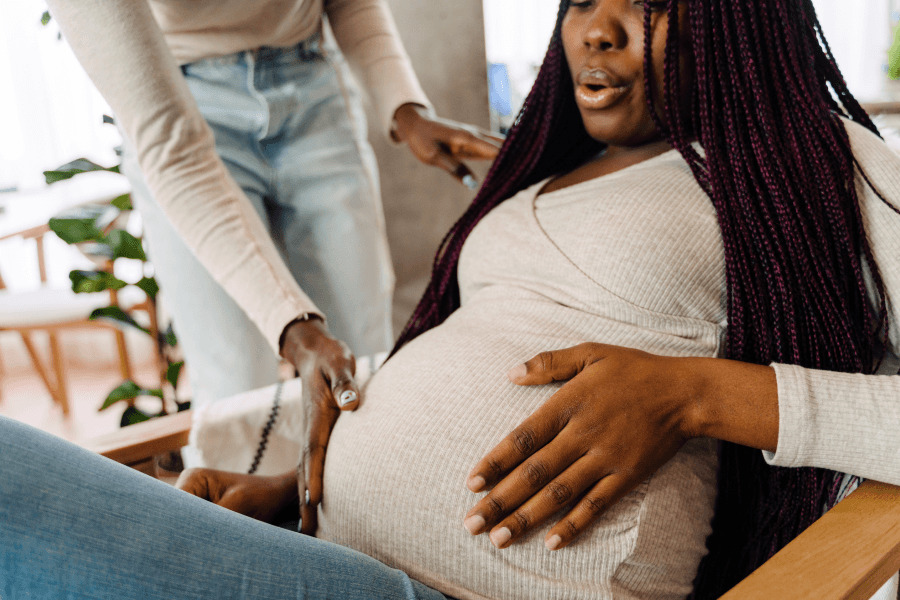


Different women have different ways of dealing with pain during childbirth. Pain is very personal. Sometimes you may cope better with the pain than at other times. Feeling happy, rested, calm and energised makes it easier to manage pain. On the contrary, being hungry, tired and frustrated usually makes it more challenging. Previous life events and experiences can also significantly influence how you experience pain during childbirth.
The three aspects of pain
Biological pain involves pain receptors, nerve pathways, the body's tissues, the size of the baby and so on. When the body's tissues are damaged or under strong pressure, pain cells are activated, sending pain impulses to the brain. When the impulse reaches the brain, we perceive the pain.
Emotional pain: What emotions does the pain evoke? Is there something I am afraid of, or does it help me give birth to my child? Here, the woman decides how to think. However, without support from the partner and others in the room, it can be challenging to maintain a positive attitude in some situations
Valuing pain: Is it dangerous, or can I think that the more it hurts, the closer I am to my child? There is always a pause between contractions. You will need to be reminded that the pain is not dangerous and that there is an end to it; when the baby is born. When it comes to emotional pain along with valuing pain, the approach and support from the staff and partner are crucial.