


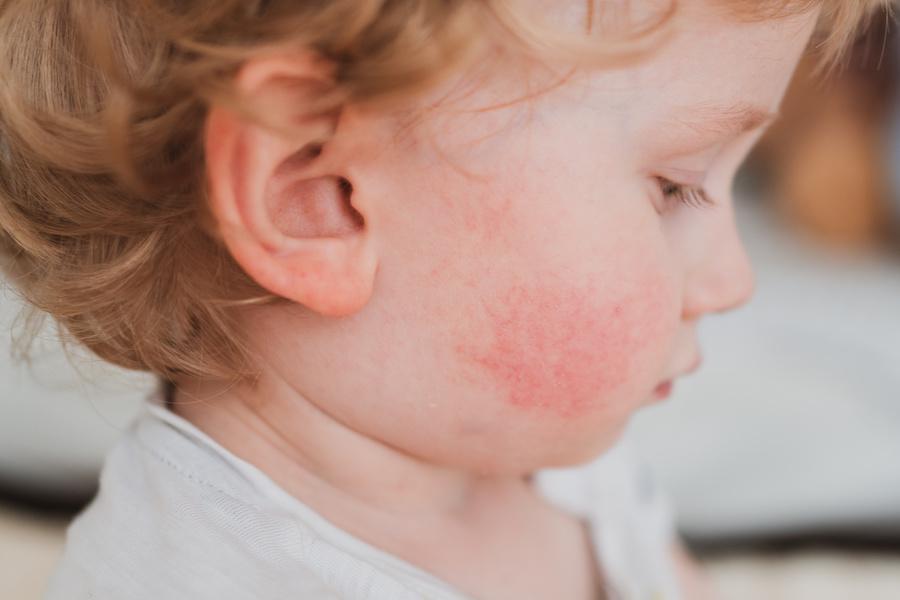


If you think your baby is reacting to a specific food, it’s important to talk with your child’s pediatrician (or another healthcare provider). Try not to remove foods from your baby’s diet on your own before your baby has been evaluated and, if appropriate, diagnosed—especially if removing the food could affect overall nutrition.
Not every reaction to food is an allergy. For example, some babies may get redness or a rash around the mouth, develop diaper-area irritation, or have an upset stomach without it being a true food allergy.
When a baby has a food allergy
Common food allergies in infancy include cow’s milk protein and egg. If your baby is diagnosed with a food allergy, you should receive individualized guidance on what to avoid and how to keep your baby’s diet nutritionally complete. This often includes support from a registered dietitian (RD/RDN)—particularly when major foods like milk or egg are being avoided.
Sources: