


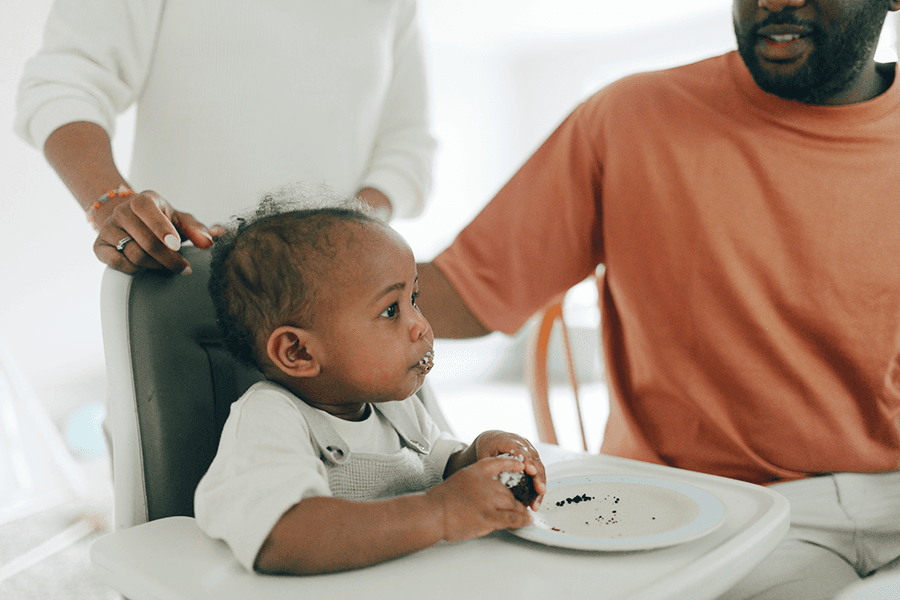


When your baby shows interest in larger portions, you can gradually move from small tastes to small meals. Breast milk or infant formula continues to provide a significant part of your baby’s nutrition at this age, so there’s no need to rush to replace milk feeds with solid foods. Let your baby’s curiosity, appetite, and developmental readiness guide the pace.
At this age, foods no longer need to be completely puréed. It’s usually enough to:
- finely chop foods
- grate them using a grater or food processor
- offer slightly larger, soft pieces that your baby can hold and self-feed
As chewing skills develop, textures can gradually become thicker and lumpier, as long as foods remain soft and safe to eat.
Over time—often between about 10 and 12 months of age—many babies move toward:
- two main meals per day
- a few snacks between meals
How much food does an 8-month-old need?
Babies are generally good at regulating how much they eat. Some meals may be small, while others are larger. When looking at intake over several days, most babies naturally get the energy and nutrients they need.
As long as your baby is growing and developing appropriately, there’s usually no reason to worry about exact portion sizes.
Because infants have small stomachs, they can’t eat large portions at once and often need to eat more frequently than adults. Offering regular meals and snacks helps ensure they get enough energy throughout the day.
One possible daily meal pattern might include:
- breakfast
- lunch
- dinner
- a few snacks in between
Sources: