


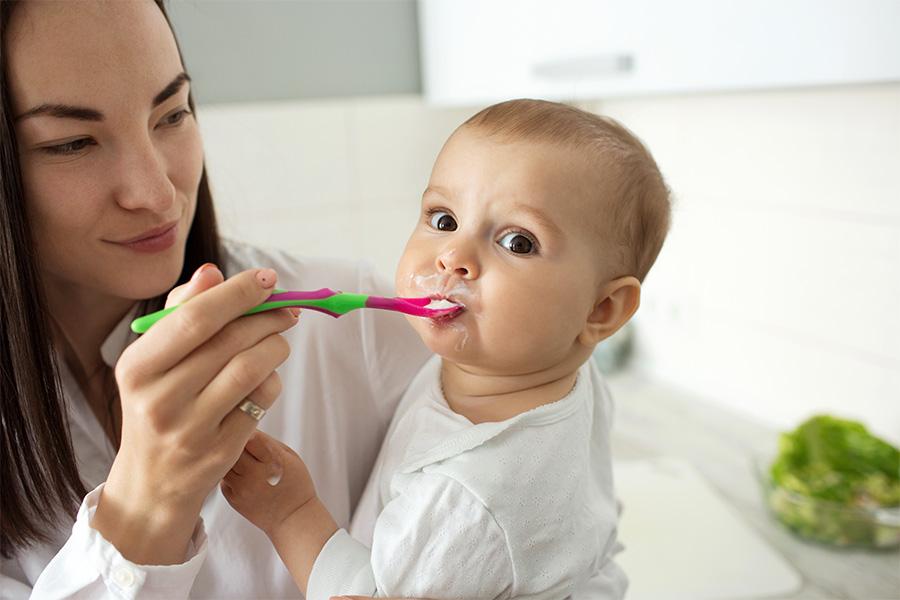


There are no strict rules about which foods to start with when introducing solid foods at around 6 months of age. The most important factor is that foods are soft, well-cooked, and developmentally appropriate to reduce the risk of choking. For example, you can:
- mash cooked potatoes or rice with a fork
- thin foods with breast milk or infant formula to create a smooth texture
- prepare purées from vegetables and root vegetables
It’s also appropriate to let babies self-feed very soft, appropriately sized pieces of food, as long as they are able to sit with support and bring food to their mouth. Older advice about introducing one food at a time over several days is no longer recommended for most infants. Current guidance supports offering a variety of foods, at a gradual pace, while observing your baby’s cues.
Protein and iron – important at this stage
You can also offer iron- and protein-rich foods such as:
- cooked, mashed or blended chicken
- fish
- ground or finely minced meat
- beans and lentils
- tofu
Iron is especially important around 6 months of age, as babies’ iron stores from birth begin to decrease. Pediatric guidance recommends offering iron-rich complementary foods once solid foods are introduced.
Previous recommendations to delay foods such as fish, egg, milk and peanuts to reduce allergy risk are no longer supported by evidence. Research now shows that early introduction of allergenic foods, when developmentally appropriate, does not increase allergy risk and may help reduce it.
Because foods like fish and eggs provide important nutrients, it’s beneficial for babies to be introduced to them during the first year of life.
Fruit, cereal and baby grains
Fruit purées made from banana, apple or pear can be prepared by gently scraping or mashing ripe fruit.
When introducing infant cereal or porridge:
- start with a few teaspoons during the first weeks
- increase the amount slowly, following your baby’s cues
Iron-fortified infant cereals can be a helpful source of iron at this age.
Gluten – small amounts are appropriate
Foods containing gluten can be introduced in small amounts, such as:
- bread
- crackers
- pasta
- bulgur
Gluten is found in wheat, barley and rye. Oats naturally contain very small amounts. Introducing gluten during infancy is considered safe and does not increase the risk of celiac disease in the general population.
Hygiene and food safety
Infants are more vulnerable to bacteria and viruses that can cause foodborne illness. Careful hygiene is essential when preparing and handling baby food:
- wash hands thoroughly
- use clean utensils and surfaces
- store and reheat food safely
How much food does a 6-month-old need?
There’s no exact amount that all babies need. Babies differ:
- some are eager to eat more
- others are satisfied with very small amounts
In most cases, babies regulate their own intake. If your baby eats small amounts of solid food but continues to receive breast milk or infant formula, nutritional needs are usually met. Eating together can encourage interest in food—many babies become more curious when they see others eating. As long as your baby is growing and developing appropriately, there’s usually no reason for concern.
If your baby seems to want large amounts of solid food, it’s wise to:
- continue offering breast milk or formula
- avoid increasing solid portions too quickly The same applies to infant cereal—build up gradually and let your baby guide the pace.
Sources: