


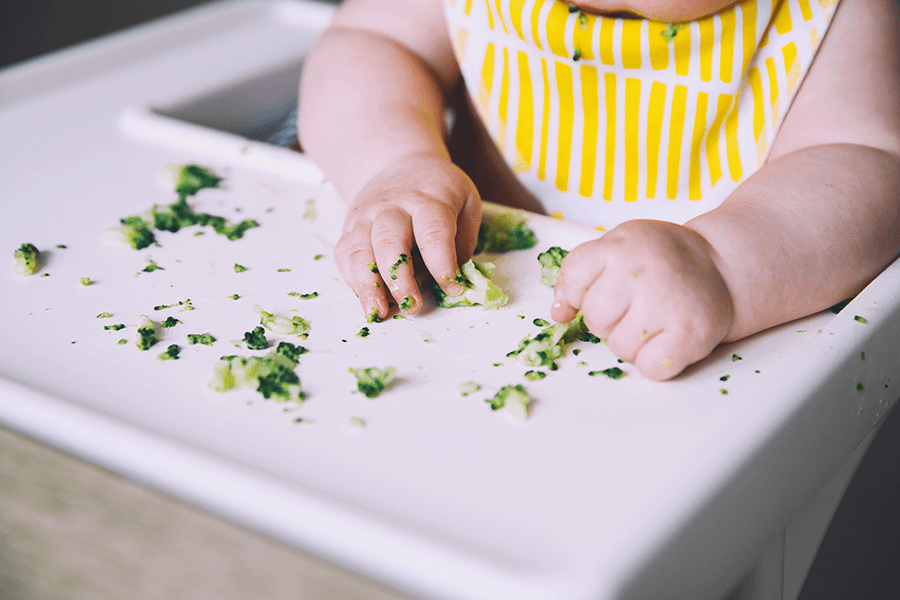


Some babies show an early interest in food. From around 4 months of age, very small tastes of regular foods may be offered if the baby shows signs of readiness, such as good head control and interest in watching others eat. These tastes should be extremely small and should not replace breast milk or infant formula.
Even when offering tiny tastes, breast milk or infant formula should continue to be the baby’s main source of nutrition until about 6 months of age.
Tiny tastes – not meals
The goal of early taste experiences is to help babies gradually become familiar with new flavours and textures. A very small amount—about the size of a pea or a pinch on a spoon or fingertip—is enough.
This stage is not about meals. There’s no need for set routines, plates, or large portions. Because the amounts are so small, these tastes don’t significantly affect overall nutrition. However, foods should always be soft, smooth, and developmentally appropriate to reduce the risk of choking.
If your baby doesn’t seem interested, there’s no need to offer taste samples at all. Breast milk or infant formula provides all the nutrition a baby needs for the first six months of life, except for vitamin D. Waiting until around 6 months to introduce complementary foods is perfectly appropriate.
Sources: